

Not every new mother who dislikes her post-baby body is ready for surgery. Postpartum body contouring delivers remarkable results, but only when the timing, health, and expectations line up correctly. Rushing into a mommy makeover before your body has fully recovered — or before you have finished having children — can compromise both safety and outcomes.
Dr. Elvan Bayraktar evaluates every patient individually at her Istanbul clinic. Below, we break down the medical, physical, and emotional criteria that determine whether you are a strong candidate for postpartum body contouring.
What Makes Someone a Good Candidate?
A good candidate for postpartum body contouring is a woman who has completed her pregnancies, reached a stable weight, and has specific physical concerns that cannot be resolved through diet and exercise alone. The American Society of Plastic Surgeons (ASPS) identifies several core eligibility factors: overall good health, realistic expectations, a BMI under 30, non-smoking status, and physical changes directly related to pregnancy such as loose abdominal skin, separated muscles, or deflated breasts. These changes are typically addressed through procedures like liposuction and abdominoplasty.
The ideal candidate understands that surgery refines and restores — it is not a weight-loss tool. Women who are within 5 to 10 kg of their target weight see the best results because their final body contour is closer to what surgery can deliver. Patients who use body contouring as a shortcut to weight loss often face higher complication rates and less satisfying aesthetic outcomes.
When Is the Right Time After Pregnancy?
Timing matters as much as candidacy itself. Most board-certified plastic surgeons recommend waiting at least 6 to 12 months after your last delivery before considering any surgical procedure. This window allows your uterus to shrink back to its pre-pregnancy size, hormonal fluctuations to stabilize, and your weight to settle at a natural baseline.
If you breastfed, add another 3 to 6 months after weaning. Breast tissue needs time to reach its resting state — operating while breasts are still engorged or fluctuating in size leads to unpredictable results. A 2022 retrospective study in Aesthetic Surgery Journal found that patients who waited at least 6 months post-weaning had 34% fewer revision rates for breast procedures compared to those who had surgery sooner.
Your weight should also be stable for at least 3 consecutive months. Significant weight fluctuations after surgery can stretch the skin again, undo muscle repair, and change breast shape — essentially reversing what the procedure achieved.
Health Requirements and Medical Clearance
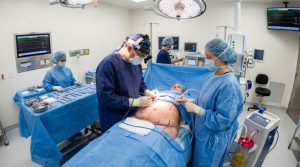
Postpartum body contouring is a major surgery performed under general anesthesia. Your body needs to be healthy enough to handle the physical stress of the operation and the recovery that follows. During your consultation, Dr. Bayraktar orders a panel of preoperative tests including complete blood count, coagulation studies, metabolic panel, and an ECG for patients over 40.
Conditions that may delay or prevent surgery include uncontrolled diabetes, active autoimmune disorders, blood clotting disorders, severe anemia, and unmanaged thyroid disease. These are not automatic disqualifiers — many can be treated or stabilized first — but they require honest discussion with your surgeon and often a clearance letter from your primary care physician.
Chronic conditions like well-managed type 2 diabetes or treated hypothyroidism do not typically prevent surgery, though they may influence the surgical plan. For instance, diabetic patients face a higher risk of delayed wound healing, so your surgeon may recommend a less extensive procedure or stage operations separately rather than combining them.
Why Smokers Face Higher Risks
Smoking is one of the strongest predictors of surgical complications. Nicotine constricts blood vessels, reducing oxygen delivery to healing tissues by up to 50%. According to a large meta-analysis published in JAMA Surgery, smokers undergoing body contouring face a 2 to 4 times higher risk of wound dehiscence, skin necrosis, and infection compared to non-smokers.
Most surgeons — including Dr. Bayraktar — require patients to stop all nicotine products (cigarettes, vaping, patches, gum) at least 4 to 6 weeks before surgery and throughout the recovery period. This is not a suggestion; it is a safety requirement. Some surgeons confirm smoking cessation with a urine cotinine test before clearing the patient for the operating room.
If you are unable to quit, your surgeon may postpone the procedure until you can commit to a smoke-free period. The data is clear: operating on active smokers significantly increases the chance of poor scarring, wound complications, and reoperation.
BMI and Weight Considerations
Body mass index plays a direct role in surgical safety and results. Most plastic surgeons prefer candidates with a BMI under 30. A BMI between 30 and 35 is sometimes acceptable depending on the procedures planned and the patient’s overall health profile, but a BMI above 35 significantly elevates the risk of complications including deep vein thrombosis (DVT), pulmonary embolism, prolonged anesthesia, and poor wound healing.
A 2023 study in Plastic and Reconstructive Surgery analyzing over 12,000 body contouring cases found that patients with a BMI above 30 had a 28% higher complication rate compared to normal-weight patients. The most common issues were seroma formation, infection, and wound breakdown.
If your BMI is currently above the safe threshold, your surgeon will likely recommend a structured weight loss plan before scheduling surgery. Losing even 5 to 10 kg can meaningfully reduce surgical risk and improve the aesthetic result. Dr. Bayraktar’s team can connect you with nutrition guidance to help you reach a stable, healthy weight before your procedure date.
Emotional Readiness and Realistic Expectations
Physical candidacy is only half the equation. The postpartum period brings sleep deprivation, hormonal shifts, and the enormous adjustment of caring for a new life. Emotional readiness means you are in a stable mental state, have a clear understanding of what surgery can and cannot do, and have a solid support system in place for recovery.
Red flags that suggest delaying surgery include active postpartum depression, making decisions under pressure from a partner, or expecting surgery to solve relationship or self-esteem issues that go beyond physical appearance. A responsible surgeon screens for these factors during consultation — not to judge, but to ensure the best possible outcome.
Realistic expectations are particularly important. Postpartum body contouring can dramatically improve your silhouette, restore abdominal wall integrity, and rejuvenate your breasts. But no surgery produces a “perfect” body. Scars are permanent (though they fade), sensation changes can occur, and final results take 6 to 12 months to fully mature. Patients who enter surgery with a clear understanding of these realities report the highest satisfaction rates.
Do You Need to Be Done Having Children?
Technically, you can have children after a mommy makeover. The surgery does not affect fertility or your ability to carry a pregnancy safely. However, pregnancy will almost certainly undo the results — re-stretching the skin and muscles that were surgically tightened, and changing breast shape and volume again.
For this reason, the vast majority of plastic surgeons strongly advise completing your family before undergoing postpartum body contouring. If there is any possibility you may want another child, it is usually better to wait. The financial and physical cost of a revision surgery is significant, and results after a second procedure on previously operated tissue may not match the original outcome.
Frequently Asked Questions
Can I get postpartum body contouring after a C-section?
Yes. In fact, a C-section scar can often be incorporated into the tummy tuck incision, meaning you may end up with better-looking scarring overall. Your surgeon will need to assess the C-section scar during your consultation to plan the optimal incision placement.
Is there an age limit for a mommy makeover?
There is no strict upper age limit. What matters is your overall health, not your birth certificate. Women in their 50s and 60s can be excellent candidates if they are healthy, non-smoking, and have realistic expectations. Your surgeon will evaluate your fitness for anesthesia during the preoperative workup.
What if I only want one procedure instead of a full mommy makeover?
Absolutely. Not every patient needs multiple procedures. Some women only want a tummy tuck, while others focus on breast work alone. Dr. Bayraktar tailors the surgical plan to your specific concerns and goals. A single procedure also means a shorter operation, faster recovery, and lower cost.
How much does a candidacy consultation cost?
Initial consultations with Dr. Bayraktar — including video consultations for international patients — are offered to help you understand whether you are a suitable candidate. Contact the clinic directly for current consultation details and scheduling.
Can I breastfeed after breast surgery as part of a mommy makeover?
Breast lift techniques that preserve the nipple-areola blood supply and milk ducts allow most women to breastfeed afterward. However, breast augmentation with implants or significant tissue removal may affect milk production. Discuss your breastfeeding goals during your consultation so the surgical approach can be adapted accordingly.