
Pregnancy changes your body in ways that diet and exercise alone cannot always reverse. Stretched abdominal muscles, stubborn fat deposits, and sagging skin often persist long after childbirth. Postpartum body contouring — commonly known as a mommy makeover — combines multiple surgical techniques to restore your pre-pregnancy figure in a single recovery period. According to the American Society of Plastic Surgeons (ASPS), mommy makeover procedures increased by 11% between 2020 and 2024, reflecting growing demand among mothers seeking safe, lasting results.
Dr. Elvan Bayraktar performs postpartum body contouring at her Istanbul clinic using advanced techniques tailored to each patient’s anatomy. In this guide, we walk through every step of the procedure, from the surgical methods involved to what recovery actually looks like.
What Is Postpartum Body Contouring?
Postpartum body contouring is a combination of plastic surgery procedures designed to address the physical changes caused by pregnancy, childbirth, and breastfeeding. Rather than treating one area in isolation, the approach targets the abdomen, breasts, and flanks together — allowing the surgeon to sculpt a balanced, proportional result during a single operation.
The most common procedures bundled under this umbrella include abdominoplasty (tummy tuck), liposuction, breast lift or augmentation, and occasionally thigh or arm lifts. A 2023 study published in Aesthetic Surgery Journal found that 87% of mommy makeover patients reported high satisfaction when procedures were combined rather than staged separately. The key advantage is one anesthesia session, one recovery window, and a cohesive aesthetic outcome that addresses multiple concerns at once.
Not every patient needs every procedure. During your consultation, Dr. Bayraktar evaluates your skin elasticity, muscle separation (diastasis recti), breast volume changes, and fat distribution to build a personalized surgical plan.
How Is a Mommy Makeover Performed Step by Step?
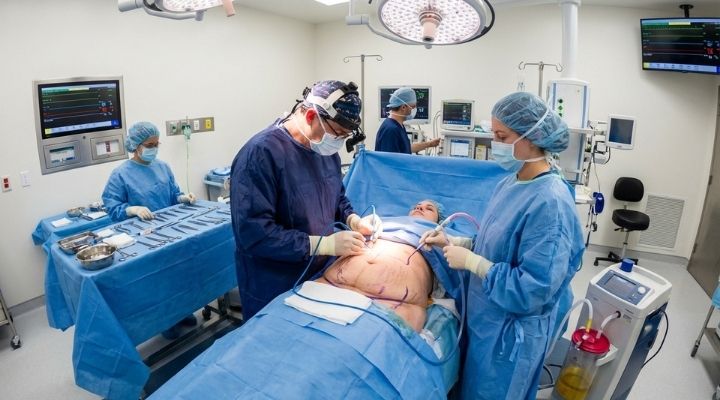
A mommy makeover follows a structured surgical sequence. The entire operation typically lasts between 3 and 6 hours depending on which procedures are combined. Here is what happens in the operating room, broken down by each component.
Tummy Tuck (Abdominoplasty)
The tummy tuck is the cornerstone of most postpartum body contouring plans. During pregnancy, the rectus abdominis muscles separate along the midline — a condition called diastasis recti that affects roughly 60% of women postpartum, according to research in the British Journal of Sports Medicine.
The surgeon makes a horizontal incision just above the pubic bone, extending from hip to hip. Through this incision, weakened or separated abdominal muscles are sutured back together using internal permanent stitches, restoring core strength and a flatter profile. Excess skin is then removed, and the remaining skin is redraped tightly over the repaired muscle wall. The belly button is repositioned through a small separate incision to sit naturally on the tightened abdomen.
Dr. Bayraktar uses progressive tension sutures — a technique that reduces the need for surgical drains and minimizes fluid accumulation. This approach, supported by data from over 600 abdominoplasty cases in Plastic and Reconstructive Surgery, cuts drain usage by 75% and lowers seroma rates to under 3%.
Liposuction for Post-Baby Fat
Stubborn fat pockets that resist diet and exercise — particularly around the flanks, lower abdomen, and thighs — are addressed through liposuction. The surgeon inserts a thin cannula through tiny incisions, breaking up and suctioning out fat cells.
Two main techniques are used in postpartum contouring. Traditional tumescent liposuction involves injecting a solution of saline, lidocaine, and epinephrine to numb the area and shrink blood vessels before suctioning. VASER liposuction uses ultrasonic energy to liquefy fat cells first, allowing more precise sculpting with less tissue trauma. VASER is particularly useful around the waistline where subtle contouring makes a visible difference.
Between 1 and 3 liters of fat can be safely removed during a single session. When combined with abdominoplasty, liposuction shapes the transition zones — the areas where the abdomen meets the hips and back — creating a smooth, natural silhouette rather than an abrupt surgical line.
Breast Lift and Augmentation
Pregnancy and breastfeeding often cause breast volume loss, sagging, and nipple displacement. A breast lift (mastopexy) removes excess skin and reshapes the breast tissue to raise the breast mound and reposition the nipple-areola complex. For patients who have lost significant volume, implants or fat transfer can restore fullness.
The choice between silicone implants, saline implants, or autologous fat transfer depends on your anatomy and goals. Fat transfer — using purified fat harvested during liposuction — offers the advantage of a natural feel and the ability to fine-tune volume, though it typically adds only 1 to 1.5 cup sizes. Implants provide more dramatic and predictable augmentation.
Dr. Bayraktar frequently combines a periareolar or vertical-pattern breast lift with simultaneous augmentation, which eliminates the need for a second surgery and keeps scarring minimal.
Non-Surgical Body Contouring Options After Pregnancy
Not every mother needs or wants surgery. Non-surgical body contouring technologies can address mild to moderate fat deposits and skin laxity without incisions, anesthesia, or significant downtime. These treatments work best for patients who are close to their ideal weight but have small, localized problem areas.
CoolSculpting and Cryolipolysis
CoolSculpting uses controlled cooling to freeze and destroy fat cells beneath the skin. Each session takes about 35 minutes per treatment area. The body naturally eliminates the dead fat cells over 2 to 3 months. Clinical data shows an average 20-25% fat reduction in the treated area per session. Most patients need 1 to 3 sessions for visible results.
The procedure has no downtime — you can return to daily activities immediately. However, CoolSculpting cannot tighten loose skin or repair separated muscles, making it unsuitable as a standalone treatment for significant postpartum changes.
Radiofrequency and Ultrasound Treatments
Devices like Morpheus8 combine microneedling with radiofrequency energy to stimulate collagen production and tighten skin from the inside out. These treatments improve skin texture and mild laxity over a series of 3 to 4 sessions spaced 4 to 6 weeks apart.
Ultrasound-based treatments such as Ultherapy target deeper tissue layers to lift and firm skin without surgery. While results are subtler than surgical options, they can complement surgical body contouring or serve as maintenance treatments after a mommy makeover.
What to Expect During Recovery
Recovery from postpartum body contouring follows a predictable timeline, though individual experiences vary based on which procedures you have and your overall health. Most patients take 2 to 3 weeks off work and need help at home, especially if they have young children.
Week 1: This is the most challenging period. You will have moderate soreness, swelling, and limited mobility. Pain medication keeps discomfort manageable. Light walking around the house is encouraged from day one to prevent blood clots. You will wear a compression garment 24 hours a day.
Weeks 2-3: Swelling begins to decrease noticeably. Many patients return to desk jobs by the end of week 2. Driving is usually possible once you stop taking prescription pain medication. Lifting anything heavier than 4.5 kg (10 pounds) remains restricted.
Weeks 4-6: Light exercise such as walking and gentle stretching can resume. The compression garment may transition to daytime-only wear. Bruising has typically resolved, and you start to see the emerging contour.
3-6 months: Final results become visible as residual swelling subsides. Scars continue to mature and fade over 12 to 18 months. Most patients report feeling fully recovered by month 3, though strenuous exercise and heavy lifting should wait until your surgeon clears you.
Risks and Safety Considerations
Postpartum body contouring is a major surgical procedure, and understanding the risks is part of making an informed decision. Complications are uncommon when the surgery is performed by a board-certified plastic surgeon in an accredited facility, but they are not zero.
The most frequently reported complications include seroma (fluid collection beneath the skin), infection at the incision site, hematoma, delayed wound healing, and temporary numbness or altered sensation. According to a large-scale review in Plastic and Reconstructive Surgery, the overall complication rate for combined body contouring procedures ranges from 10% to 20%, with most issues resolving with conservative management.
Smoking doubles the risk of wound healing problems and infection. Patients are asked to stop smoking at least 4 to 6 weeks before surgery and throughout recovery. BMI also matters — patients with a BMI over 30 face higher complication rates, which is why surgeons typically recommend reaching a stable, healthy weight before operating.
Dr. Bayraktar’s clinic follows strict safety protocols including preoperative blood work, DVT prophylaxis, and overnight monitoring for combined procedures lasting more than 4 hours.
Why Choose Istanbul for Postpartum Body Contouring?
Istanbul has become one of the world’s leading destinations for cosmetic surgery, and the numbers tell the story. Turkey performed over 1.2 million aesthetic procedures in 2023, ranking among the top 5 countries globally according to the International Society of Aesthetic Plastic Surgery (ISAPS). The city’s combination of experienced surgeons, JCI-accredited hospitals, and competitive pricing draws patients from across Europe, the Middle East, and beyond.
Cost is a significant factor. A mommy makeover in Istanbul typically costs 40-60% less than comparable procedures in the UK, Germany, or the United States — without compromising on quality or safety standards. Packages often include airport transfers, hotel accommodation, pre- and post-operative consultations, and a dedicated patient coordinator who speaks your language.
Dr. Elvan Bayraktar operates in a fully accredited surgical facility equipped with the latest technology. Her approach prioritizes natural-looking results, patient safety, and individualized treatment planning. Every surgical plan is discussed in a detailed preoperative consultation — either in person or via video call — so you know exactly what to expect before traveling.
Frequently Asked Questions
How long after giving birth can I have postpartum body contouring?
Most surgeons recommend waiting at least 6 to 12 months after your last pregnancy and 3 to 6 months after finishing breastfeeding. Your weight should be stable for at least 3 months before surgery. This waiting period allows your body to recover fully and gives you a more accurate surgical starting point.
Can I have more children after a mommy makeover?
Yes, future pregnancies are medically possible after postpartum body contouring. However, pregnancy will likely reverse many of the surgical results — stretching the repaired abdominal muscles and skin again. For this reason, most surgeons advise completing your family before undergoing the procedure.
How long does the surgery take?
A typical postpartum body contouring procedure takes 3 to 6 hours depending on which components are included. A tummy tuck with liposuction alone takes about 3 hours, while adding a breast lift or augmentation extends the total to 5 to 6 hours.
Will there be visible scars?
Scars are an unavoidable part of any surgical procedure. The tummy tuck incision runs along the bikini line and is typically hidden by underwear or swimwear. Breast scars follow the natural contours of the breast. Scars fade significantly over 12 to 18 months with proper care, and scar management treatments like silicone sheets can further improve their appearance.
Is postpartum body contouring safe?
When performed by a board-certified plastic surgeon in an accredited facility, postpartum body contouring has a strong safety profile. The overall complication rate for combined procedures ranges from 10% to 20%, with most complications being minor and treatable. Choosing an experienced surgeon and following pre- and post-operative instructions significantly reduces your risk.
What is involved in postpartum body contouring in Istanbul?
The cost depends on which procedures are included and is determined individually after an in-person consultation, based on your needs and the scope of the procedure. Please contact our clinic for personalized information.